History and Origin
The Maine Coon is one of the oldest natural cat breeds in North America, originating from the state of Maine in the United States. The breed's exact origins are shrouded in legend, with popular myths suggesting they are descendants of longhaired cats brought by seafarers or even raccoons (a biological impossibility). The most plausible theory is that Maine Coons are descended from domestic short-haired cats and long-haired cats brought by European settlers, particularly from England or Scandinavia, that interbred. These cats adapted to the harsh New England winters, developing their thick, water-repellent coat and sturdy build. Known for their exceptional mousing abilities, they were prized on farms and ships. The breed gained popularity at cat shows in the late 19th century but faced decline with the introduction of Persian cats. However, dedicated breeders revived the Maine Coon in the mid-20th century, and today it ranks among the most popular cat breeds worldwide.
Appearance
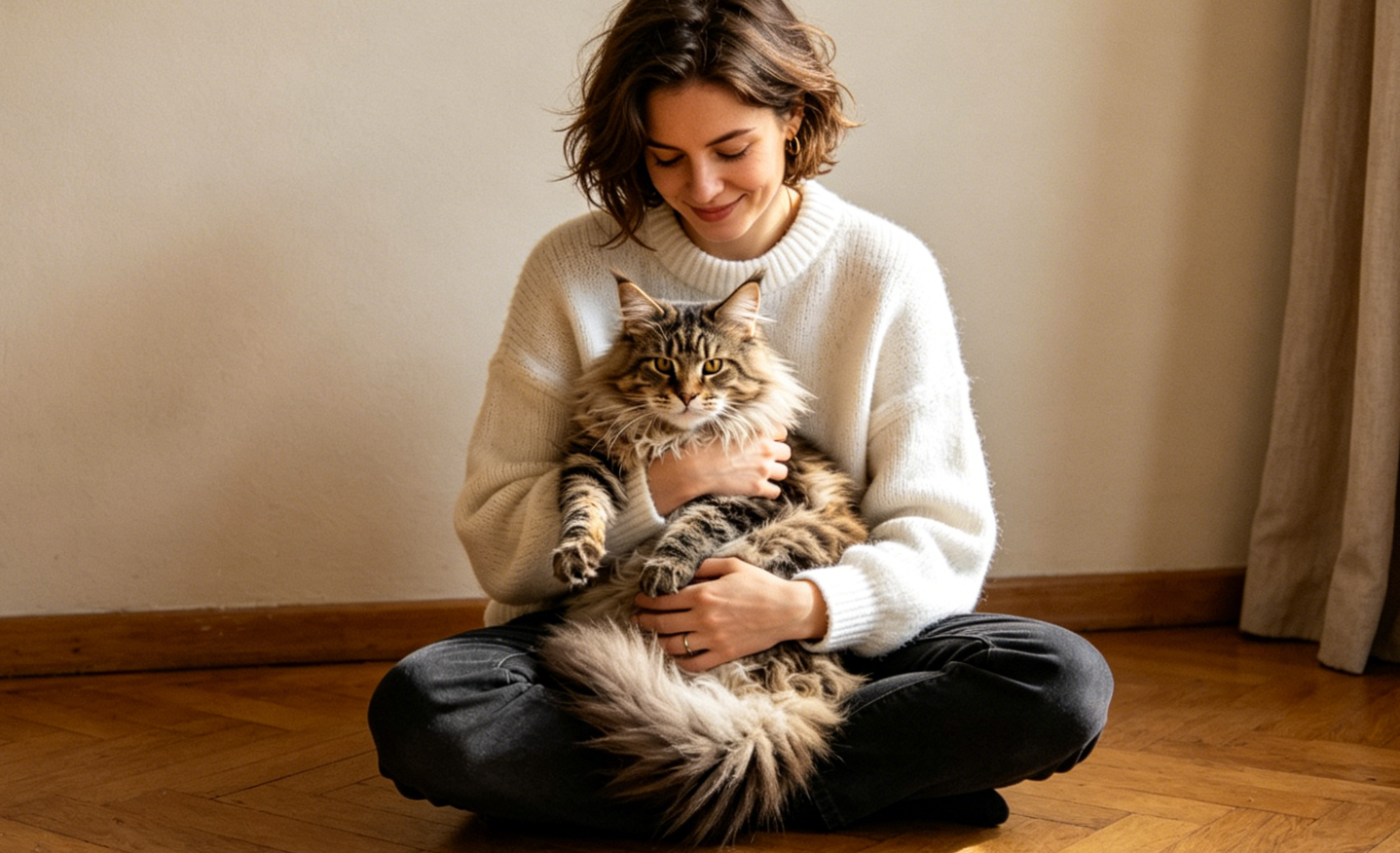
Maine Coons are the largest domesticated cat breed, with males weighing 13 to 18 pounds (5.9-8.2 kg) and females 8 to 12 pounds (3.6-5.4 kg). They can reach up to 40 inches in length, including the tail. Their bodies are muscular, broad-chested, and rectangular in shape. The coat is long, silky, and water-resistant, falling smoothly over the body. It is shorter on the shoulders and longer on the stomach and flanks. The breed boasts a ruff around the neck, tufted ears, and a long, bushy tail that they often wrap around themselves for warmth. The luxurious coat comes in a wide array of colors and patterns, including solid, tabby, tortoiseshell, and bicolor, with all colors except pointed patterns (like Siamese) accepted. A classic tabby pattern with an 'M' on the forehead is common. Their eyes are large, expressive, and come in shades of green, gold, or copper, with white cats sometimes having blue or odd eyes. The ears are large, pointed, and set high on the head, often with tufts of hair. The face has a gentle, somewhat sweet expression.
Temperament and Personality
Maine Coons are often called "gentle giants" for their friendly, easygoing nature. They are intelligent, affectionate, and playful without being overly demanding. They are known to be dog-like in their loyalty, often following their owners around the house and greeting them at the door. Unlike many cats, they enjoy water and may dip their paws in bowls or play with dripping faucets. They are not lap cats typically, but they love being near their humans. Their voices are unique, a soft chirp or trill rather than a loud meow. They are generally good with children, dogs, and other pets, making them excellent family companions. They retain a kittenish playfulness well into adulthood and enjoy interactive toys and puzzle games.
Suitable for
Exercise and Mental Stimulation
Maine Coons have moderate to high energy levels. They need daily play sessions with toys that mimic prey, such as wand toys, laser pointers, and fetch toys. Many Maine Coons enjoy playing fetch and can learn tricks. Provide cat trees, shelves, or window perches for climbing and observation. Puzzle feeders and treat-dispensing toys help engage their intelligence. They are not hyperactive but appreciate at least 15-30 minutes of focused interaction daily. Boredom can lead to destructive behavior, so environmental enrichment is essential.
Grooming Needs
Despite their long coat, Maine Coons' fur is tangle-resistant if brushed regularly. Brush at least twice a week with a metal comb or slicker brush, increasing to daily during shedding seasons (spring and fall). Pay attention to the ruff, belly, and tail mats. Bathing is rarely needed. Trim nails every 2-3 weeks and clean ears as needed. Dental hygiene is important; brush teeth regularly if possible.
Health and Lifespan
Maine Coons are generally healthy but prone to certain conditions. Average lifespan is 12-15 years, with some living into their late teens. Common health issues include:
Reputable breeders provide health clearances for HCM, SMA, and hip evaluations. Genetic testing reduces risk. Annual vet check-ups and a balanced diet are crucial.
Monthly Cost Estimate
High-quality dry/wet cat food $40–$70
Litter $15–$25
Treats and toys $10–$20
Preventive care (flea/tick, heartworm, dental treats) $10–$20
Pet insurance (recommended) $30–$50
Total minimum $105
Initial costs include adoption/purchase fee ($800–$2,000+), spaying/neutering, initial vaccinations, and setup (cat tree, bed, bowls, toys). Annual vet visits and emergency funds should be factored in. Costs vary by region and individual choices.
In summary, the Maine Coon is a magnificent, loving breed that brings joy to many homes. With proper care, attention to health, and plenty of love, they make lifelong companions.